
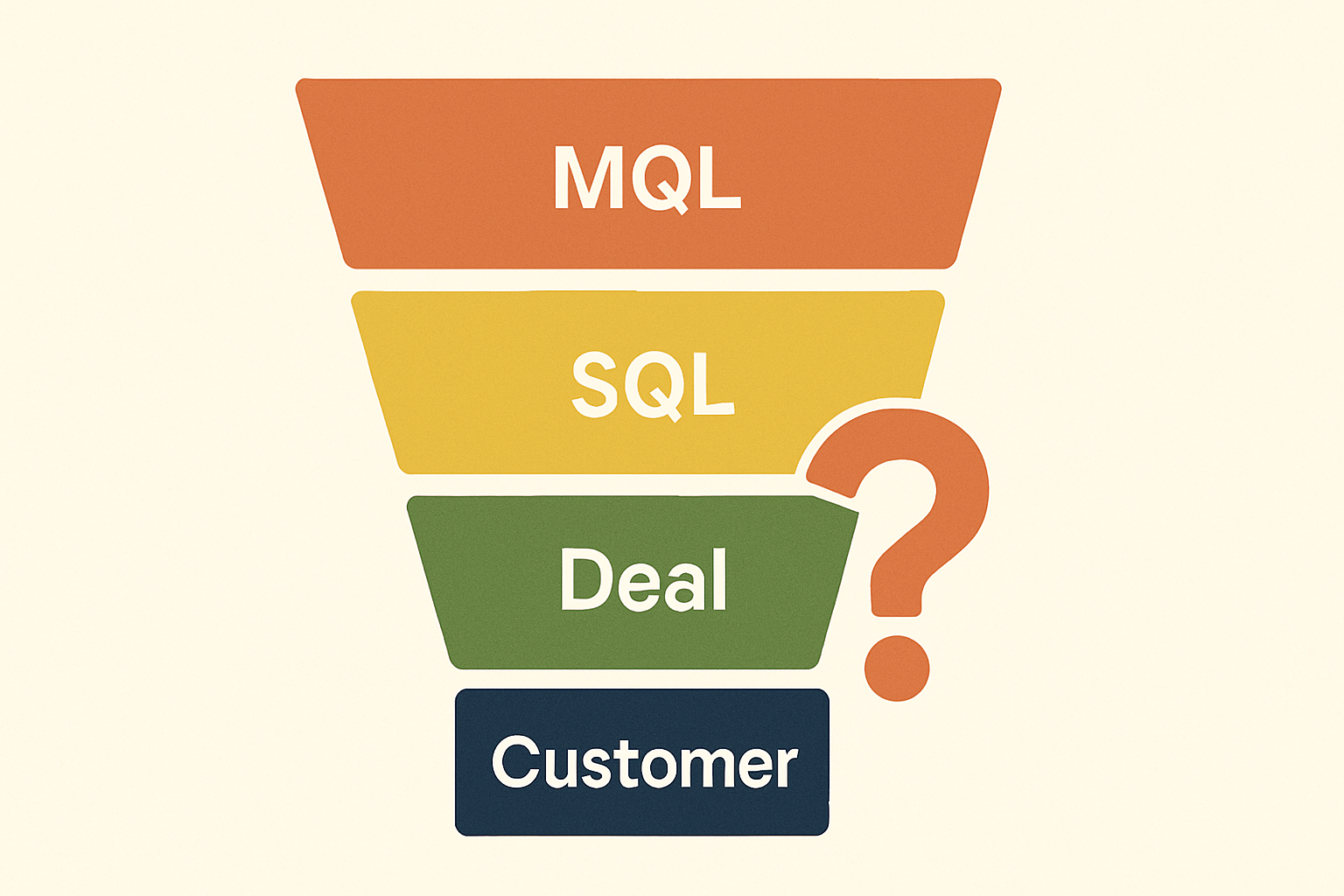
Many organizations adopt HubSpot’s lifecycle stages without reviewing whether the default structure aligns with their actual sales and marketing process. This superficial convenience often creates long-term issues: distorted reporting, unclear handoffs, and misaligned expectations between teams. For smaller businesses, these problems are intensified by limited resources and a lack of formal operational oversight.
The Lifecycle Stage property is not a label of convenience. It shapes segmentation, automation, attribution, and reporting across contact, company, and deal records. When used inconsistently, it produces misleading funnel metrics, bloated MQL counts, and confusion around sales-readiness.
The root cause is often definitional ambiguity. If your marketing and sales teams define stages differently, automation and reporting will reflect that fragmentation. A contact may be marked as an MQL for viewing a webpage, while a qualified lead might never progress because automation fails to advance them.
Begin with a structured audit. Review how lifecycle stages are assigned and whether contact behavior supports those classifications. Look for stages with imbalanced volume, inconsistent progression, or automation that changes values without human input.
Recast your lifecycle definitions with precision. An MQL should meet specific behavioral and demographic criteria. An SQL should require explicit acceptance by a sales representative. Use related fields such as Lead Status, Original Source, and Form Submission to inform automation.
The introduction of the Leads object in HubSpot provides an intermediate step between MQL and deal creation. Unlike contacts, leads allow your sales team to track interest before formally opening an opportunity. Tying Lifecycle Stage progression to lead creation helps ensure that only qualified, engaged prospects move into the pipeline.
Update your workflows accordingly. Avoid automatic stage changes based solely on marketing activity. Require actions by sales personnel for progression. Integrate the Leads object as a checkpoint before converting to SQL.
Complement your process with consistent data hygiene: standardize properties, use Duplicate Management, and periodically requalify contacts. Without this, even a well-defined lifecycle model will deteriorate.
Your dashboards should reflect reality, not optimism. Use Lifecycle Stage, Deal Stage, Create Date, Lead Source, and the Leads object to track meaningful progression. This ensures that marketing attribution is based on substance, sales efforts are properly focused, and leadership can trust the integrity of the funnel.
Lifecycle accuracy is not cosmetic.
Here are several practical recommendations we implement with SMBinfo clients:
- Audit with contact samples: Select representative records from each lifecycle stage and review the behavioral triggers and data points that placed them there. This often reveals inconsistencies between assumptions and automation.
- Use Leads as a structured checkpoint: Configure workflows so only contacts elevated to the Leads object through sales interaction proceed to SQL. This adds a clear qualification gate between marketing and pipeline entry.
- Tie automation to specific, verifiable fields: Avoid generic actions like “email opened” as lifecycle triggers. Use structured data, such as Lead Status updates, Form Submission, or Original Source, to drive stage changes.
- Require sales confirmation for SQL progression: Avoid letting workflows move contacts to SQL automatically. Build in an action or property update by the sales team to ensure proper handoff.
- Maintain discipline with deduplication and requalification: Use HubSpot’s Duplicate Management regularly, and establish a cadence for reviewing and archiving unresponsive contacts.
- Align dashboards to operational logic: Ensure reporting blends lifecycle progression with supporting properties like Create Date, Deal Stage, and Lead Source. Review funnel logic regularly to confirm it reflects actual sales performance. It is a fundamental element of your go-to-market system. At SMBinfo, we help growing businesses regain control of their lifecycle model through structured audits, practical adjustments, and disciplined implementation. If your current configuration obscures more than it reveals, we can assist in restoring clarity and operational confidence.
Summary Tip: Align your lifecycle stages with your organization’s customer journey to prevent structural disconnects and ensure coherent reporting.